


New World Screwworm: What North Texas Pet Owners Need to Know
If you've been scrolling through the news lately, you may have come across headlines about something called New World screwworm making its way into the United States. It sounds alarming, and the coverage can feel overwhelming. But before you spiral, here's what actually matters: this parasite is preventable, it is treatable, and North Texas animal health professionals are already on it.
We sat down with HSNT's veterinary team, Dr. Mendes and Dr. Jones, as well as Nelda, our VP of Lifesaving Initiatives, to get the facts straight and give North Texas pet owners a clear, calm picture of what's happening and what to do.
So What Exactly Is It?
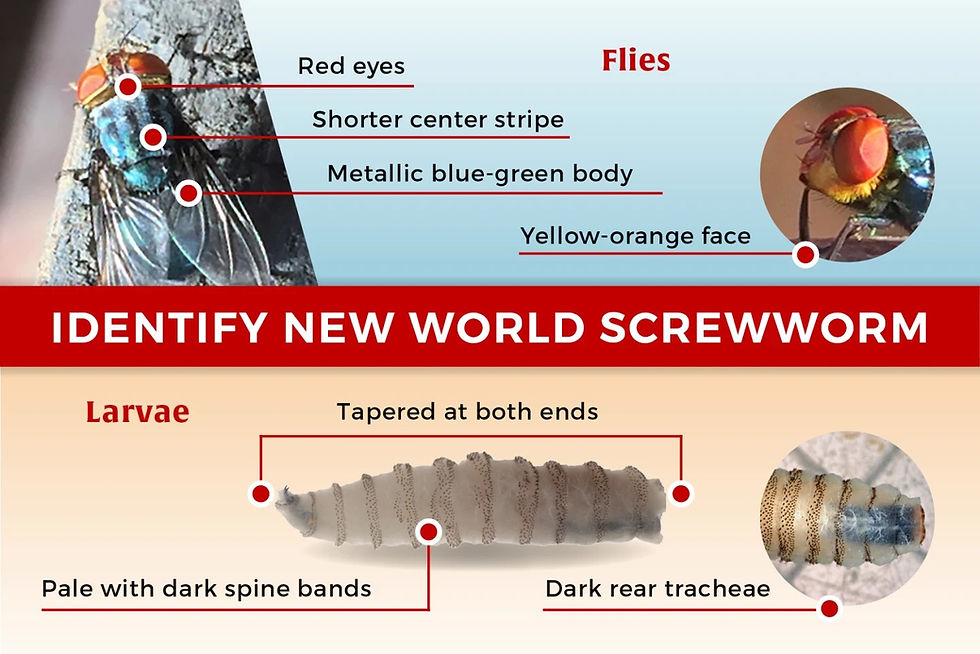
New World screwworm is a parasite caused by the larvae of a specific fly. Unlike common flies that feed only on dead tissue, these larvae burrow into the living tissue of warm-blooded animals, including dogs, cats, livestock, wildlife, and occasionally humans. Our vet team explains that the fly lays eggs through open wounds, and the larvae spread quickly, causing severe tissue damage that can be fatal if untreated.
The United States successfully eradicated this parasite in 1966, but it has since migrated back through Mexico and has now been confirmed in animals within Texas and other states. It's a serious development, but it's also one that animal health officials, shelters, and veterinarians across the country have been preparing for.
What Is the Risk Right Now for North Texas Pets?
The short answer: low, but not zero.
"At this time, the risk to pets in North Texas remains low," says Nelda. "There have been no confirmed cases of New World screwworm in the Dallas/Fort Worth area. However, vigilance is important." Our vet team echoes that. The risk is especially relevant for pets that spend significant time outdoors, but for most North Texas pet owners who are already practicing routine care, the situation is manageable.
One important clarification that has been missing from a lot of news coverage: New World screwworm is not a contagious disease. It is not spread from animal to animal. It is also not affecting meat or the food supply, both of which remain safe and secure.
What To Watch For
Dr. Mendes advises pet owners to be diligent about checking their pets regularly for any wounds, and to seek veterinary care immediately if anything looks unusual.
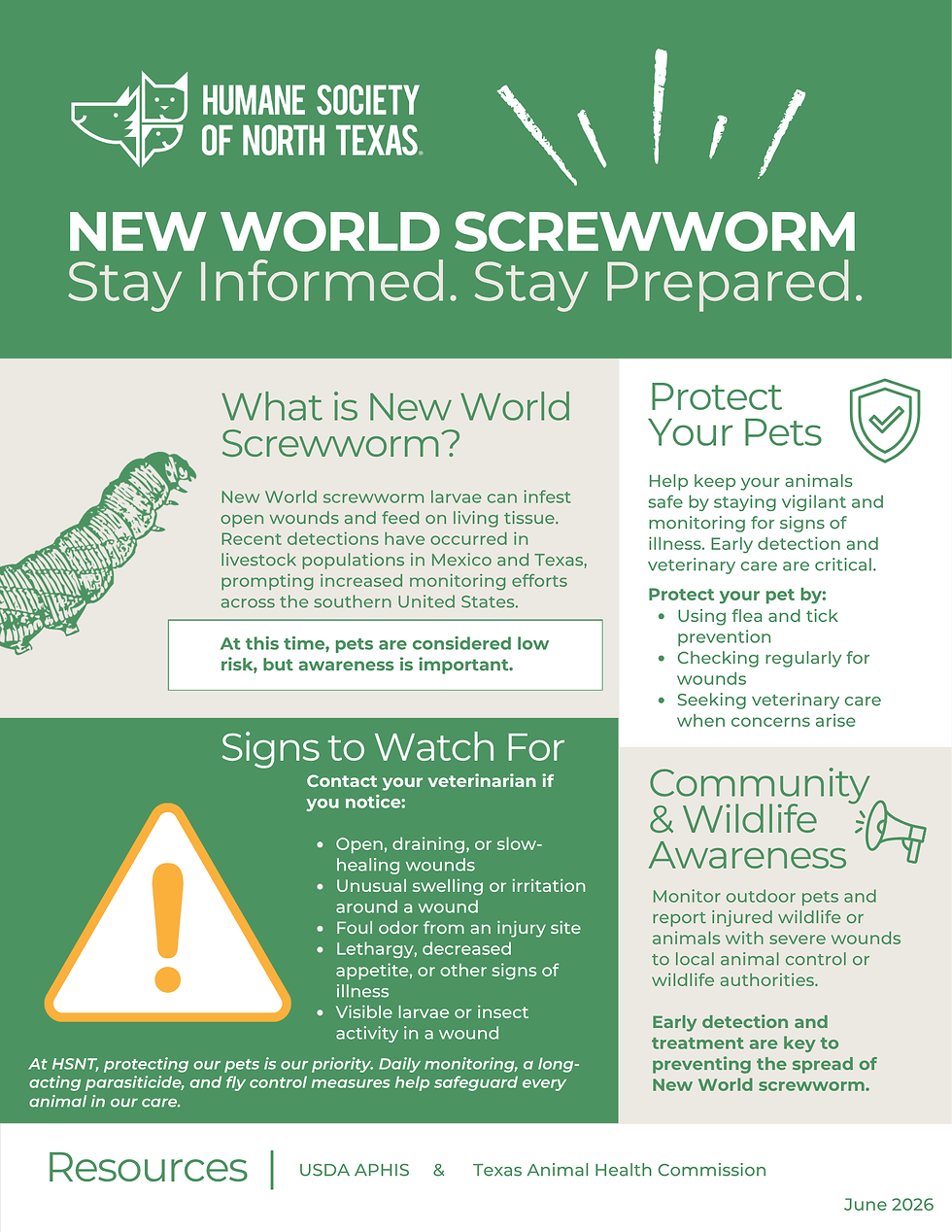
Signs that warrant a vet visit right away include:
● Open, draining, or slow-healing wounds
● Unusual swelling or irritation around a wound
● Foul odor coming from an injury site
● Lethargy, decreased appetite, or other signs of illness
● Visible larvae or insect activity in or around a wound
If you notice maggots on your pet, don't wait. "Even regular maggots, not just New World screwworm, can be very dangerous to a pet," Dr. Mendes notes.
Most people picture a serious injury when they think about wound risk, but our vet team wants pet owners to think broader than that. Any open wound, whether from a recent surgery, a tick bite, a minor scrape, or even a fresh litter of newborns, can potentially be a source for infection. "If possible, keep outdoor animals inside until their wounds are healed and monitor the areas daily for any evidence of parasites," Dr. Mendes advises. This is especially important for pets who have recently had spay or neuter surgeries, who have given birth, or who have any unhealed skin injuries.
What You Can Do Right Now
Prevention is straightforward, and if your pet is already on routine parasite prevention, you may be more protected than you realize.
"Pet owners can keep their pets on Credelio or NexGard, which are USDA-approved for treatment of screwworm," says Dr. Mendes. "They can also use fly spray on their pets to decrease flies from landing on them." For its part, HSNT has already implemented additional precautions for animals coming from higher-risk areas. "Every transport animal receives a thorough veterinary examination before travel," Nelda explains.
In short, the most effective things you can do right now are:
● Keep your pet on year-round parasite prevention such as Credelio or NexGard
● Check your pet regularly for wounds, especially after time outdoors
● Keep recently injured or post-surgery pets indoors until fully healed
● Seek veterinary care promptly if you notice anything unusual

A Word From HSNT
If the headlines have you feeling anxious, Nelda has a message for you.
"I would encourage pet owners to stay informed through trusted sources and not let fear outweigh the facts. We have an outstanding network of veterinarians, shelters, and animal health professionals working together to monitor this situation every day. If your pet is on year-round parasite prevention, you regularly check for injuries, and you seek veterinary care when something doesn't seem right, you're already doing the most important things to keep your pet safe."
At the Humane Society of North Texas, our commitment to the animals in our care and to this community does not pause for uncertainty. We have faced animal health challenges before, and by staying informed, prepared, and by working together, North Texas can navigate this one too.
Note: This blog is not a substitute for professional veterinary advice. If you believe your pet may be showing signs of illness or infestation, contact your veterinarian immediately.
Humane Society of North Texas - Pets and People, Saving Each Other®
HSNT’s mission is to save, shelter, protect, and advocate for all animals in need in North Texas. www.hsnt.org
Citations:



Comments